



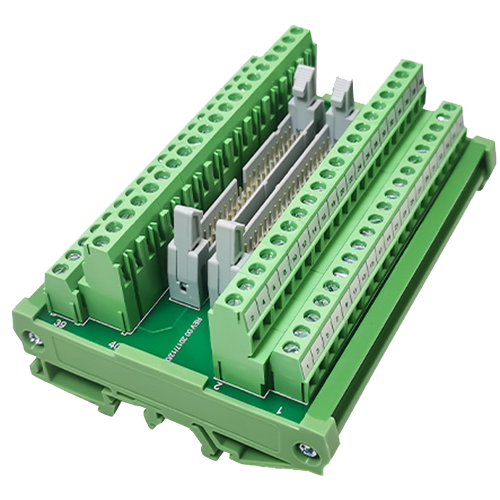
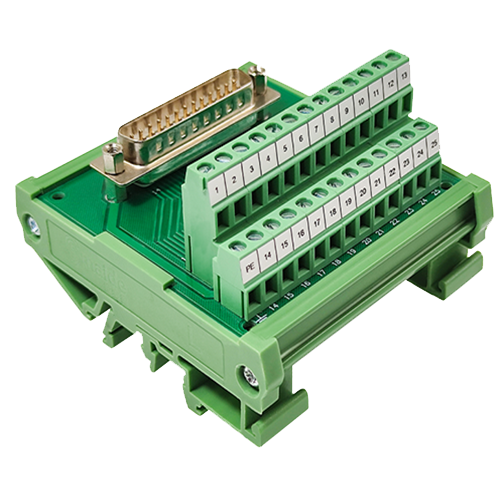
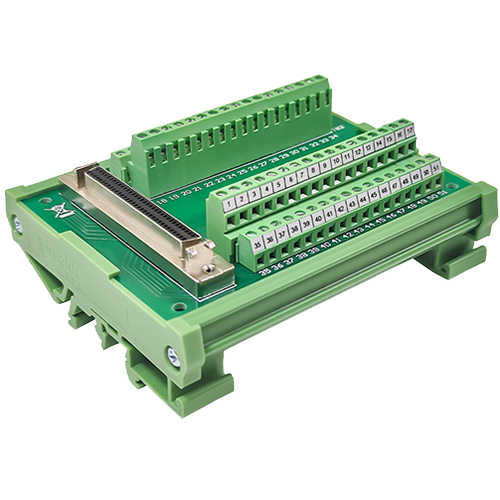
The IO terminal block achieves efficient signal and power transmission through modular design, widely used in PLC control cabinets, robotics, and distributed I/O systems.
1. Advantages:
Signal Integration: Integrating multiple input/output (I/O) signals into a single cable to reduce wiring complexity (e.g., consolidating 16 signals into one interface).
Electrical Isolation: Insulators prevent signal interference and ensure transmission stability (e.g., gold-plated contacts reduce resistance).
Quick Maintenance: Supports hot-swapping and tool-free wiring (e.g., spring clamp technology), reducing equipment debugging time.
2. Classification and Key Features
Classified by structure:
Direct insertion type: suitable for high-density scenarios (such as DB37 interface), supporting 32A current load.
Rail mounted type: compatible with DIN standards, convenient for PLC control cabinet integration (such as European style 8-position terminal block).
Blade type: Ultra thin design (12mm thickness), saving 50% installation space.
By signal type:
Digital terminal block: divided into PNP/NPN types, supporting 16-32 channels.
Analog terminal block: integrated temperature/voltage detection, used for precision instruments.